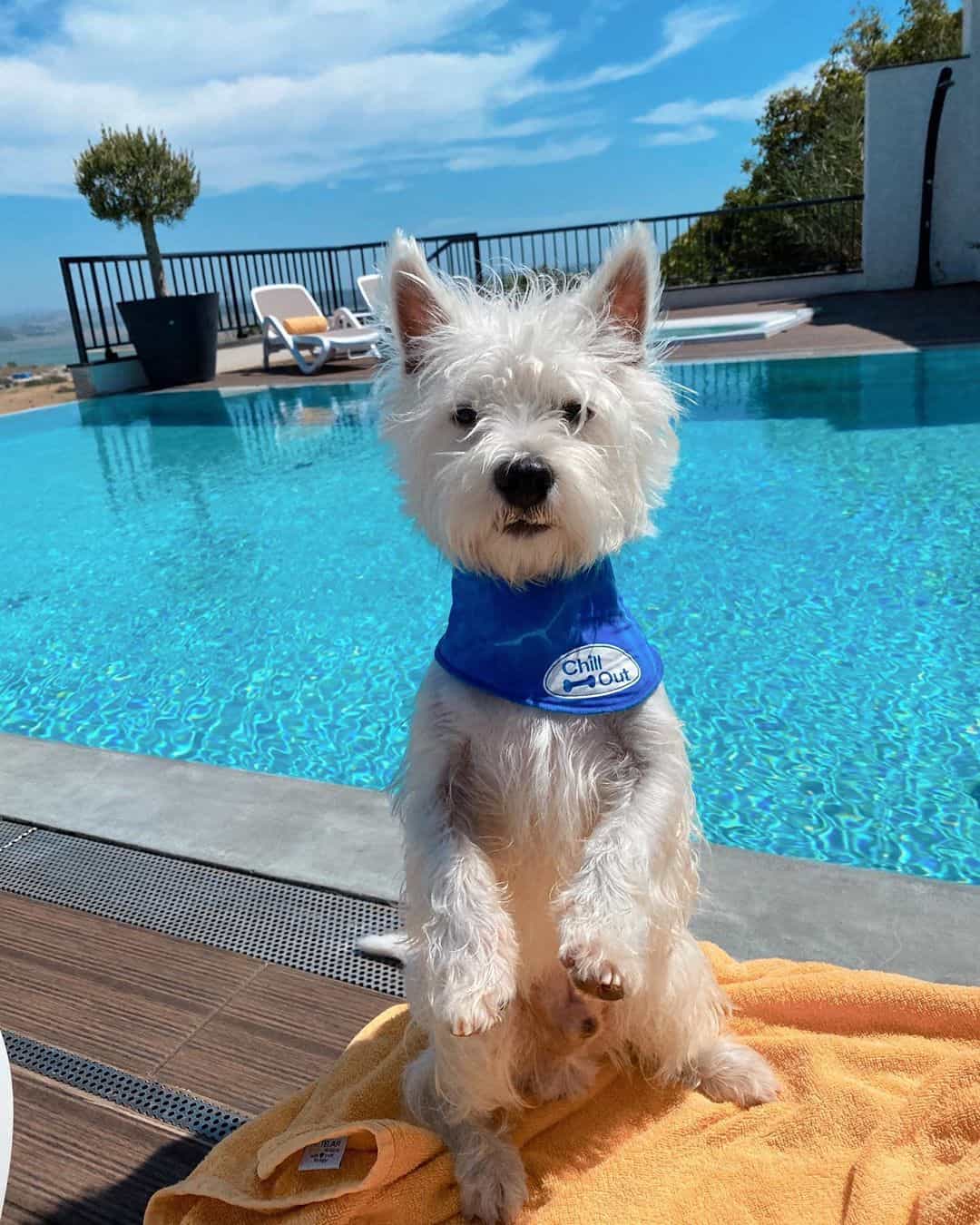
Take a Westie’s confidence and a Yorkie’s sass, put them in a tiny package, and you get the Fourche Terrier. It’s one of those mixes where both parent breeds are already full of personality, so the result is a small dog with an attitude that far exceeds its size.
We live with a purebred Westie, so we know the terrier side of this equation well. The Yorkie adds its own layer of energy, loyalty, and – let’s be honest – dramatic flair. If you’re considering a Fourche Terrier, here’s what you’re signing up for.
What Is a Fourche Terrier?
A Fourche Terrier is a cross between a West Highland White Terrier (Westie) and a Yorkshire Terrier (Yorkie). It’s a designer breed, meaning it’s not recognized by the AKC, but it’s popular among people looking for a small, intelligent, spirited companion.
The name “Fourche” comes from the French word for “fork” – a nod to the two terrier lineages being forked together. Like all first-generation crosses, what you get depends on which parent’s genes are more dominant. Some Fourche Terriers look more Westie, others more Yorkie. Temperament varies too.
Size and Appearance
Fourche Terriers are small dogs. Most adults weigh between 3 and 7 kg (6 to 15 lbs) and stand about 18 to 28 cm (7 to 11 inches) tall. They tend to be slightly smaller than a purebred Westie but a bit sturdier than a purebred Yorkie.
The coat is usually medium-length, soft to slightly wiry, and can be straight or wavy. Colors vary more than with other Westie mixes – you might see white, tan, cream, black and tan, or a combination. This depends entirely on which parent’s coloring comes through.
They have an alert, expressive face with dark eyes and small erect or semi-erect ears. Their body is compact and well-proportioned. Most people who see a Fourche Terrier for the first time say something like “what a cute little dog” – which is accurate.
Temperament
Double terrier energy. That’s the short version.
Alert and Watchful
Both parent breeds were bred as working terriers, and that alertness carries through. Your Fourche Terrier will notice everything – every sound, every movement, every person walking past the window. They make excellent watchdogs for their size.
The flip side: they bark. A lot. Both Westies and Yorkies are vocal breeds, and the Fourche Terrier inherits this enthusiastically. If barking is a dealbreaker for you (apartment, noise-sensitive neighbors), this breed might not be the best fit unless you commit to serious training early.
Loyal and Affectionate
Fourche Terriers bond tightly with their owners. The Yorkie influence makes them more of a lap dog than a purebred Westie – they want to be on you, next to you, or at minimum in the same room as you. They can develop separation anxiety if left alone for long periods, so they’re best for people who are home frequently or can bring their dog along.
Brave and Confident
This is a dog that doesn’t know it’s small. The Westie’s stubbornness and the Yorkie’s bravado combine to create a dog that will stand up to much larger animals without thinking twice. This can be endearing. It can also get them into trouble at the dog park. Keep an eye on them around bigger dogs.
Intelligent but Independent
Both parent breeds are smart. The Fourche Terrier learns quickly – commands, tricks, routines. But they also inherited the terrier independence, which means they’ll sometimes decide your instructions are more like suggestions. Training requires consistency and patience.
Health and Lifespan
Fourche Terriers are generally healthy dogs with a lifespan of 12 to 15 years. The hybrid vigor from mixing two breeds can reduce some inherited risks, but they’re still susceptible to conditions from either side.
Health issues to watch for include patellar luxation (common in both parent breeds), dental disease (small breeds are especially prone – brush their teeth regularly), eye problems including cataracts, skin allergies (from the Westie side), and tracheal collapse (from the Yorkie side, more common in very small dogs).
Regular vet checkups catch most issues early. If buying from a breeder, ask about patella, eye, and hip evaluations on both parents. For more on the Westie side of health concerns, see our article on Westie lifespan and health.
Grooming
Grooming needs depend on which coat type dominates. Yorkie-leaning coats are silkier and longer, requiring daily brushing and regular trims. Westie-leaning coats are denser and wiry, needing brushing every other day but being more forgiving of missed sessions.
Most Fourche Terriers are low to moderate shedders, making them a decent option for allergy-conscious households. Professional grooming every 5 to 7 weeks keeps the coat in good shape.
Pay special attention to the area around the eyes (tear staining is common), ears (check weekly for dirt and infection), and teeth (daily brushing is ideal, a few times a week at minimum). Trim nails every 3-4 weeks.
Training
Start early and be consistent. Fourche Terriers are smart enough to learn anything, but the double terrier stubbornness means they need a firm (not harsh) approach.
Positive reinforcement is essential – treats, praise, play. Keep sessions short (5-10 minutes) because they get bored quickly. Vary the exercises. If they sense you’re doing the same routine every time, they’ll mentally check out.
Socialization is critical. Expose them to different people, dogs, environments, and sounds as puppies. This helps manage the barking, reduces reactivity toward strangers, and builds confidence in new situations. An unsocialized Fourche Terrier can become snappy and anxious.
Leash training deserves extra attention. The terrier prey drive means they’ll lunge after squirrels, birds, and anything else that moves. Reliable recall is important but may never be 100% with this breed – keep them leashed in unsecured areas.
Living Situation
Fourche Terriers adapt to apartments and houses equally well. Their small size means they don’t need a lot of space. However, the barking tendency means apartment living requires extra training to keep the noise manageable.
They need about 30 to 45 minutes of exercise daily – a walk plus some indoor play. They’re happy with interactive toys, short training sessions, and games. Mental stimulation matters as much as physical exercise with this breed.
They do well with singles, couples, and families with older children. Very young children can be too rough for a dog this small, and the Fourche Terrier won’t tolerate being grabbed or squeezed – they may snap. With other dogs, they’re generally social but can be scrappy, especially with larger breeds. Introduce them carefully.
How Much Does a Fourche Terrier Cost?
Expect $500 to $1,500 from a breeder, depending on location and lineage. This isn’t one of the most expensive designer breeds, as both parent breeds are relatively common.
Adoption is a good option too. Check Westie rescues, Yorkie rescues, and general small-breed shelters. Ongoing costs are modest for a small dog – food, grooming, and regular vet visits are the main expenses.
Fourche Terrier vs Other Westie Mixes
Compared to the Westiepoo, the Fourche Terrier is smaller and more vocal. The Westiepoo is a better choice if you want a slightly bigger, lower-shedding dog with less barking.
Compared to the Highland Maltie (Westie-Maltese), the Fourche Terrier has more energy and more terrier intensity. The Highland Maltie is calmer and more of a lap dog.
Compared to the Scoland Terrier (Westie-Scottie), the Fourche Terrier is friendlier with strangers and more sociable. The Scoland Terrier is more reserved and independent.
Frequently Asked Questions
How big does a Fourche Terrier get?
Most adult Fourche Terriers weigh between 3 and 7 kg (6 to 15 lbs) and stand 18 to 28 cm (7 to 11 inches) tall. They’re slightly smaller than purebred Westies but sturdier than purebred Yorkies.
Do Fourche Terriers bark a lot?
Yes. Both parent breeds are vocal, and the Fourche Terrier inherits this trait. Early training and socialization can help manage excessive barking, but expect some level of alerting barks throughout their life.
Are Fourche Terriers good for first-time owners?
They can be, if you’re prepared for the terrier stubbornness and commit to consistent training. They’re intelligent and eager to bond, which helps. But if you’ve never trained a dog, the independent streak may be challenging.
How long do Fourche Terriers live?
The average lifespan is 12 to 15 years with proper care, a balanced diet, regular exercise, and routine veterinary checkups.
Do Fourche Terriers get along with cats?
It depends on socialization. Introduced early and properly, many Fourche Terriers coexist fine with cats. However, both parent breeds have prey drive, so some individuals will always want to chase. Supervise interactions, especially early on.
More About Westies and Westie Mixes
Explore other Westie mixes: the Westiepoo, the Highland Maltie, the Scoland Terrier, or the Westie and Poodle mix.
For everything about purebred Westies, read our complete West Highland White Terrier guide. And if your Fourche Terrier is small enough for in-cabin air travel (most are), our guide to flying with your dog covers what you need to know.
Related Guides
More on the westie personality traits your Fourche Terrier may inherit:

![Reverse Sneezing In Dogs: My Scary Experience As A Westie Owner! [+Video]](https://westievibes.com/wp-content/uploads/2022/10/reverse-sneezing-dogs-westie-owner.jpeg)