
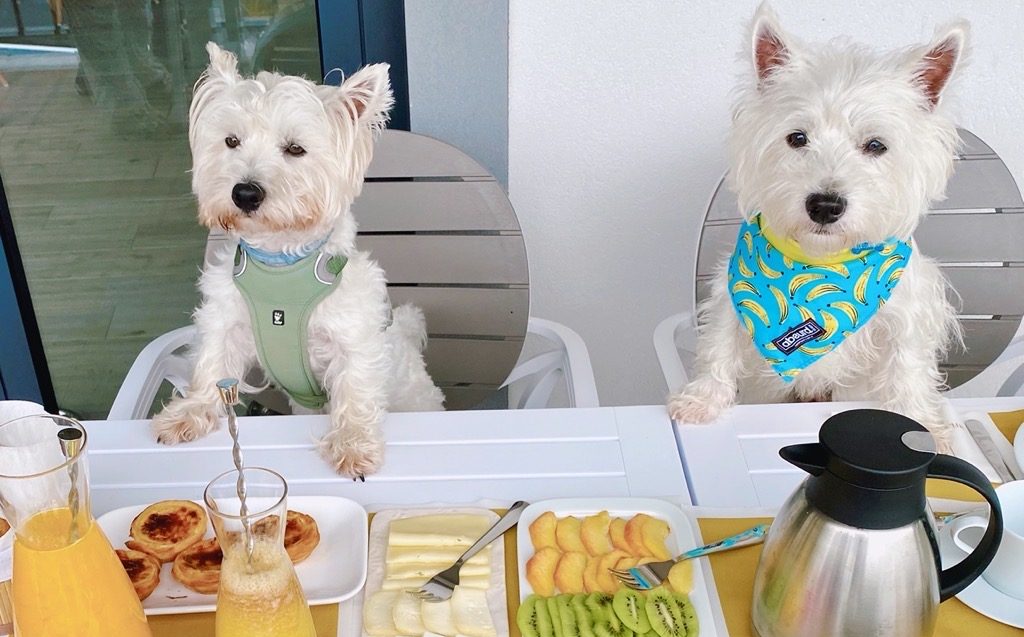
Sami has been my crash course in Westies for six years now, and I'm still learning things about the breed. Some of what I thought I knew turned out to be wrong - including a fact I'd repeated for years until I actually checked it.
Here are twelve genuinely true Westie facts, sourced where it matters and Sami-tested where I could.
1. Westies were bred to hunt
The West Highland White Terrier was developed in Scotland specifically to hunt vermin - foxes, badgers, rats, and other small game. They were working dogs first, companion dogs much later. This is the single most important fact for understanding Westie behaviour. The chase instinct, the digging, the relentless focus on a squirrel - that's not personality, that's job training that nobody asked for. Sami doesn't know he isn't supposed to be hunting fox. Nobody told him.
2. The "West Highland" name was settled in the 20th century, not earlier
I used to repeat that Westies were named after West Lothian. That's wrong. The breed standard and modern name come from the West Highlands of Scotland, where the Malcolm family of Poltalloch developed the white strain in the 19th century. The "West Highland White Terrier" name was formalised by The Kennel Club in 1907. Before that, the dogs were variously called Poltalloch Terriers, Roseneath Terriers, and White Scottish Terriers depending on the breeder's preference.
3. They were bred white on purpose
This is the origin story I find most compelling. Colonel Edward Malcolm reportedly lost a beloved reddish-coloured terrier to a hunting accident in the 1800s - the dog was mistaken for a fox and shot. After that, he selected only for white-coated dogs in his breeding program, so they could be clearly distinguished from prey in the field. Whether the story is fully accurate or somewhat embellished, the practical reason for the white coat is well documented: visibility in rough Scottish terrain.
4. AKC recognition came in 1908
The American Kennel Club officially recognised the West Highland White Terrier in 1908, one year after The Kennel Club in the UK. It's been in the AKC's Terrier Group ever since. There's a longer history piece here if you want the deeper version.
5. Their senses are sharp - but the "100 times stronger than humans" claim needs context
You'll see this stat everywhere: a dog's sense of smell is 100,000 times more powerful than a human's. The actual research range is wider (estimates run from 10,000 to 100,000 times more sensitive depending on the breed and the specific compound), and it varies massively by breed. Bloodhounds are at the top. Westies, like most small terriers, are good but not exceptional smellers. Their hearing is genuinely sharp though - they can detect frequencies up to roughly 47-65 kHz, well above the human range of about 20 kHz. This is why Sami knows the car is coming before we do.
6. The Cesar Westie is real
The Cesar dog food brand has used Westies in its marketing since 1985. The original Cesar dog, named Cesar himself, was a real Westie owned by an executive at the founding company. The breed appears in the brand logo to this day. Whether your dog should eat Cesar is a separate question - Sami doesn't, because of his food allergies.
7. Westitude is a real personality trait, not marketing
The term "Westitude" gets thrown around to describe the breed's confident, stubborn, often hilarious personality - and it's earned. Westies are not Labrador-style please-the-human dogs. They have opinions. They negotiate. They will absolutely look you in the eye and refuse to do something they did happily yesterday. This is part of the breed. If you want a biddable dog, get a different breed.
8. They're surprisingly small but solidly built
Westies are short - typically 10-11 inches at the shoulder - but they're not fragile. The breed standard calls for a compact, muscular dog with substance. Sami weighs about 18 lbs (8 kg) and feels every bit of it when he sits on you. They're not toy dogs. They're working terriers in a small package.
9. The white coat is single-colour by breed standard
Westies come in white. Only white. The breed standard doesn't allow for cream, biscuit, or any other variation - any non-white markings are a disqualification in conformation. Some Westies do have very faint cream tinges, especially around the ears, but a "champagne" or "wheaten" Westie is either a poorly-bred dog or a different breed entirely (often confused with Cairn Terriers, which come in multiple colours including wheaten).
10. They have specific breed health quirks
Westies are generally healthy, with a 12-16 year lifespan, but the breed has a known list of conditions to watch for: skin allergies (very common), Westie lung disease (idiopathic pulmonary fibrosis), Legg-Calvé-Perthes disease (a hip condition in small breeds), and craniomandibular osteopathy (a jaw bone condition affecting young Westies). A reputable breeder will be testing for these.
11. They're not actually "smooth" terriers
Older sources sometimes call Westies "smooth terriers." This is a misnomer. Westies have a hard double coat - a wiry outer layer and a soft undercoat - traditionally maintained by hand-stripping rather than clipping. The visual effect after grooming is smooth, but the coat itself is the opposite of smooth.
12. Sami fact: they really do choose the weirdest napping spots
This isn't a breed-wide scientific claim, but every Westie owner I've talked to confirms it. Sami sleeps in our closet. We have twenty dog beds in this house. He picks the closet. It's part of the routine now - he asks for the door to be opened, walks in, and goes to sleep on the floor. If your Westie has a weird napping spot, you're in good company.
Frequently asked questions
Are Westies and West Highland White Terriers the same dog?
Yes. "Westie" is the nickname; "West Highland White Terrier" is the formal breed name. Same dog.
Are Westies hypoallergenic?
Considered low-shedding, which makes them better than average for people with mild dog allergies, but no dog is truly hypoallergenic. The skin issues Westies are prone to can sometimes produce more dander than other breeds, so it's worth meeting one before committing.
Are Westies good family dogs?
Yes, with the right family. They suit households with older kids who can respect a confident, opinionated dog. Less ideal for very young children who handle dogs roughly.

About Westie Vibes
Westie Vibes is the home of Sami the West Highland White Terrier — tips, stories, and everything we’ve learned about life with a Westie.
Follow along and subscribe for weekly updates.