
A friend of ours has a Westiepoo, and every time we meet up, it’s impossible not to compare notes. We have Sami, a purebred Westie, and their dog has all of Sami’s stubbornness and energy but with a curlier coat and slightly less attitude. Slightly.
It got us curious enough to dig into the breed. If you’re considering a Westiepoo – or you already have one and want to know what you’re in for – here’s what we’ve learned from research and from spending time around these dogs.
Table of Contents (click to expand)
What Is a Westiepoo?
A Westiepoo (also called a Westiedoodle or Wee-Poo) is a cross between a West Highland White Terrier and a Miniature Poodle. It’s a designer breed, meaning it’s not recognized by major kennel clubs like the AKC, but it’s become increasingly popular since the 1970s.
Because it’s a first-generation hybrid, you’re essentially getting a 50/50 mix – but there’s no guarantee which parent’s traits will dominate. Some Westiepoos look more Westie, others look more Poodle. Same goes for temperament. That unpredictability is part of the charm (and part of the challenge).
Size and Appearance
Westiepoos are small dogs. Most adults weigh between 9 and 14 kg (20 to 30 lbs) and stand about 28 to 43 cm (11 to 17 inches) tall. If the Poodle parent’s genes are dominant, your dog might lean toward the larger end. If the Westie genes win out, expect something more compact.
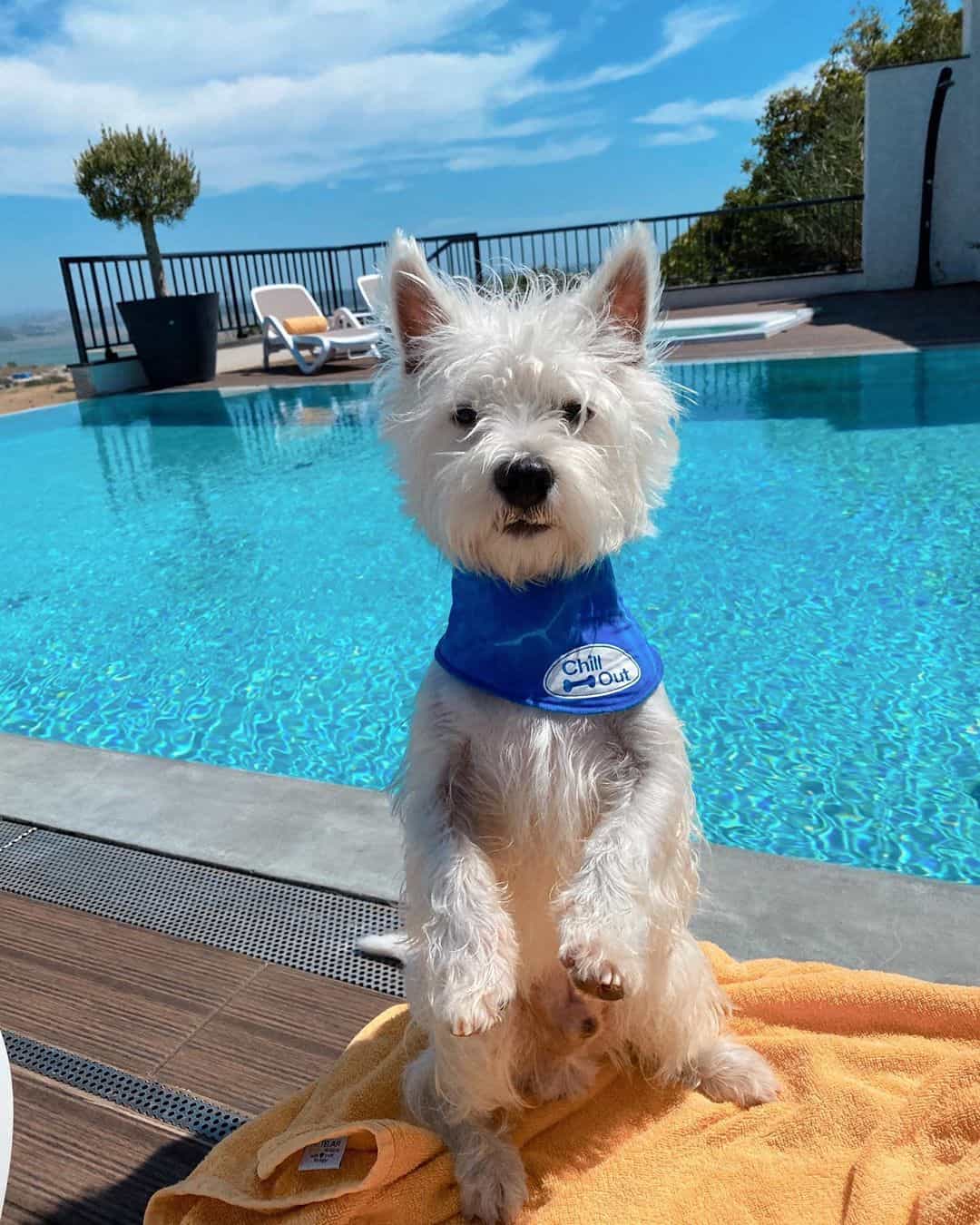
Their coat is usually medium-length – somewhere between the Westie’s wiry double coat and the Poodle’s tight curls. Most Westiepoos end up with a wavy or loosely curly coat that’s dense and soft. Color is typically white or cream, though some have patches of grey or light tan.
The face is where you really see the personality. They have round, expressive eyes, a black nose, and ears that fold forward slightly. They always look like they’re paying attention to something – because they usually are.
Westiepoo Temperament
This is where the Westie-Poodle combination really shines. You get the Poodle’s intelligence and eagerness to please mixed with the Westie’s stubbornness and independent streak. The result is a dog that’s smart enough to learn anything but occasionally decides it doesn’t feel like it.
High Energy
Westiepoos are active dogs. They need around 30 to 60 minutes of exercise daily – walks, playtime, fetch, or just tearing around the yard. If they don’t get enough activity, they get bored. And a bored Westiepoo will find creative ways to redecorate your house. We’ve seen the aftermath. It’s not pretty.
Loyal and Loving
These dogs bond hard with their people. They’re affectionate without being overly clingy (the Westie independence helps balance out the Poodle’s people-pleasing nature). Most Westiepoos handle alone time better than pure Poodles, which means separation anxiety is less of an issue. Still, they’d always rather be with you than without you.
Family-Friendly
Westiepoos are generally great with kids, especially older children who know how to handle a small dog. They’re patient and playful, but like most terriers, they have limits when it comes to rough handling. Always supervise young children around any dog.
Alert and Vocal
The Westie side brings a strong watchdog instinct. Your Westiepoo will bark at strangers, odd sounds, and sometimes absolutely nothing. This is great if you want a dog that lets you know when someone’s at the door. Less great if you have thin walls and patient neighbors.
Prey Drive
This is important. Westies were bred to hunt vermin, and that instinct often carries over. Your Westiepoo may chase squirrels, cats, or anything small that moves. Keep them on a leash in unsecured areas, and be cautious if you have other small pets at home.
Grooming
One of the biggest selling points of the Westiepoo is the low-shedding coat. Thanks to the Poodle parent, many Westiepoos shed very little, which makes them a popular choice for people with allergies. They’re not technically hypoallergenic (no dog truly is), but they come close.
That said, low-shedding doesn’t mean low-maintenance. Their coat mats easily, especially around the ears, eyes, and legs. You’ll need to brush them at least every other day. Professional grooming every 6 to 8 weeks keeps things manageable.
Don’t forget the basics: trim nails monthly, check ears weekly for dirt or infection, and brush their teeth regularly. Dental disease is common in small breeds, and it can shorten their life by years if ignored.
Health and Lifespan
Westiepoos generally live 12 to 15 years. As a mixed breed, they benefit from what’s called hybrid vigor – a wider gene pool that can reduce the risk of some inherited conditions. But “can reduce” isn’t “eliminates.” They can still inherit health issues from either parent breed.
Common health concerns to watch for include atopic dermatitis and skin allergies (very common on the Westie side), hip dysplasia, patellar luxation (dislocating kneecap), ear infections (that curly coat traps moisture), and eye problems like cataracts.
If you’re buying from a breeder, ask about health screenings on both parents. A good breeder will have done patella evaluations, hip evaluations, and eye exams. If they can’t show you those results, look elsewhere.
For more on the Westie side of the health equation, our article on Westie lifespan and health issues goes deep into what to expect.
Training
Westiepoos are smart – really smart. The Poodle is one of the most intelligent dog breeds, and Westies, while stubborn, are cleverer than they let on. Your Westiepoo will pick up commands quickly. Whether they choose to follow them is a different conversation.
Positive reinforcement works best. Treats, praise, and play. Harsh corrections will backfire with this breed – they’ll just shut down or get more stubborn. Keep training sessions short and interesting. If you do the same thing for too long, they’ll check out mentally.
Start early with socialization. Expose them to different people, dogs, environments, and sounds as puppies. This is especially important for managing the barking and prey drive later. A well-socialized Westiepoo is a confident, relaxed dog. An unsocialized one can be reactive and anxious.
Living Situation
Westiepoos are adaptable. They do fine in apartments as long as they get their daily exercise. A yard is a bonus but not a requirement. If you do have a yard, make sure it’s fenced – that prey drive means they will chase things, and a terrier-Poodle mix is surprisingly fast.
They handle most climates reasonably well, though if you keep their coat trimmed short, they’ll need a sweater in cold weather. Yes, they look ridiculous in it. No, they don’t care.
Westiepoo vs Purebred Westie
Since we live with a purebred Westie, we get asked about this a lot. The main differences come down to coat (Westiepoos shed less and are better for allergies), temperament (Westiepoos tend to be slightly less independent and more eager to please), and size (Westiepoos are usually a bit bigger). Purebred Westies have a more predictable personality and appearance, while Westiepoos are a bit of a wildcard.
Both are great dogs. If allergies are your primary concern, the Westiepoo has the edge. If you want a dog with a well-documented breed standard and more predictable traits, a purebred Westie might be the better choice. Learn more in our complete Westie breed guide.
How Much Does a Westiepoo Cost?
Expect to pay somewhere between $800 and $2,500 from a reputable breeder, depending on location, lineage, and demand. Adoption is another option – Westiepoos do end up in shelters and rescue organizations. Breed-specific Westie or Poodle rescues are a good place to start, as they often take in mixes too.
Beyond the purchase price, budget for vet visits, food, grooming (every 6-8 weeks adds up), and the inevitable chewed-up shoes during the puppy phase.
Frequently Asked Questions
Are Westiepoos good for people with allergies?
Westiepoos are low-shedding dogs thanks to their Poodle parent, making them a better option for allergy sufferers than many breeds. However, no dog is truly hypoallergenic. If allergies are a concern, spend time around a Westiepoo before committing.
How big does a Westiepoo get?
Most adult Westiepoos weigh between 9 and 14 kg (20 to 30 lbs) and stand 28 to 43 cm (11 to 17 inches) tall. Size depends on which parent breed’s genes are more dominant.
Do Westiepoos bark a lot?
Yes. The Westie side brings a watchdog instinct, and Westiepoos tend to bark at strangers, unfamiliar sounds, and sometimes nothing at all. Early training and socialization can help manage excessive barking.
How long do Westiepoos live?
The average Westiepoo lifespan is 12 to 15 years. Regular vet checkups, a healthy diet, and daily exercise are the best ways to maximize their years.
Are Westiepoos easy to train?
They’re intelligent and learn quickly, but the Westie stubbornness can show up. Positive reinforcement and short, varied training sessions work best. Start socialization and training early for the best results.
More Westie Mixes and Breed Information
Interested in other Westie mixes? Check out the Westie and Maltese mix (Highland Maltie), the Westie and Yorkie mix (Fourche Terrier), or the Westie and Scottie mix (Scoland Terrier).
For a deep dive into the purebred Westie, read our complete West Highland White Terrier guide. And if you’re thinking about flying with your dog, small breeds like the Westiepoo are great candidates for in-cabin travel.
Related Guides
Since Westiepoos inherit westie traits, these guides are relevant:
Understanding the westie parent:

![Reverse Sneezing In Dogs: My Scary Experience As A Westie Owner! [+Video]](https://westievibes.com/wp-content/uploads/2022/10/reverse-sneezing-dogs-westie-owner.jpeg)

2 months ago we rescued a 5 year old Westiepoo…. I’ve always wanted a Westie, but when we met this little guy at the shelter, we immediately fell in love with him. He is SO affectionate!! WOW. Even more than our Golden Retrievers were! This article pretty much nailed everything about our little guy!
Thomas, that’s great!
I’m so happy you like your Westipoo puppy 🙂
I have one concern i have a rescue elderly cat who we brought into our home a year ago after the death of our rescue bichon .
I have been offered an older ex breeding dog ,is this dog more likely to have a stronger prey drive .I dont want to upset either animal .Thanks karen