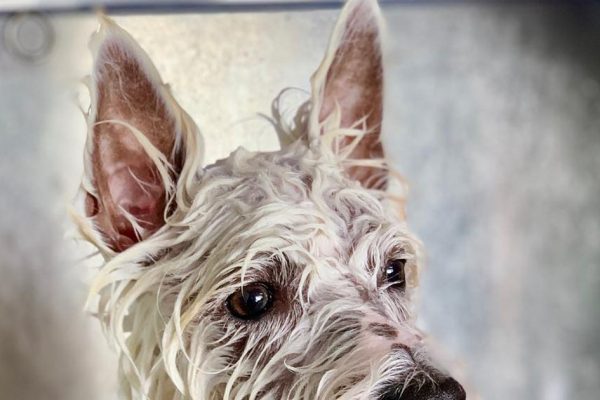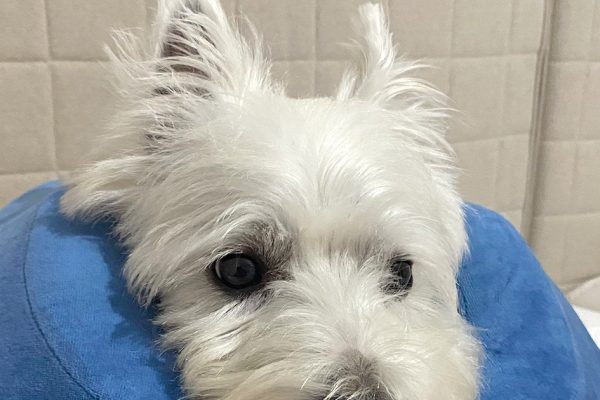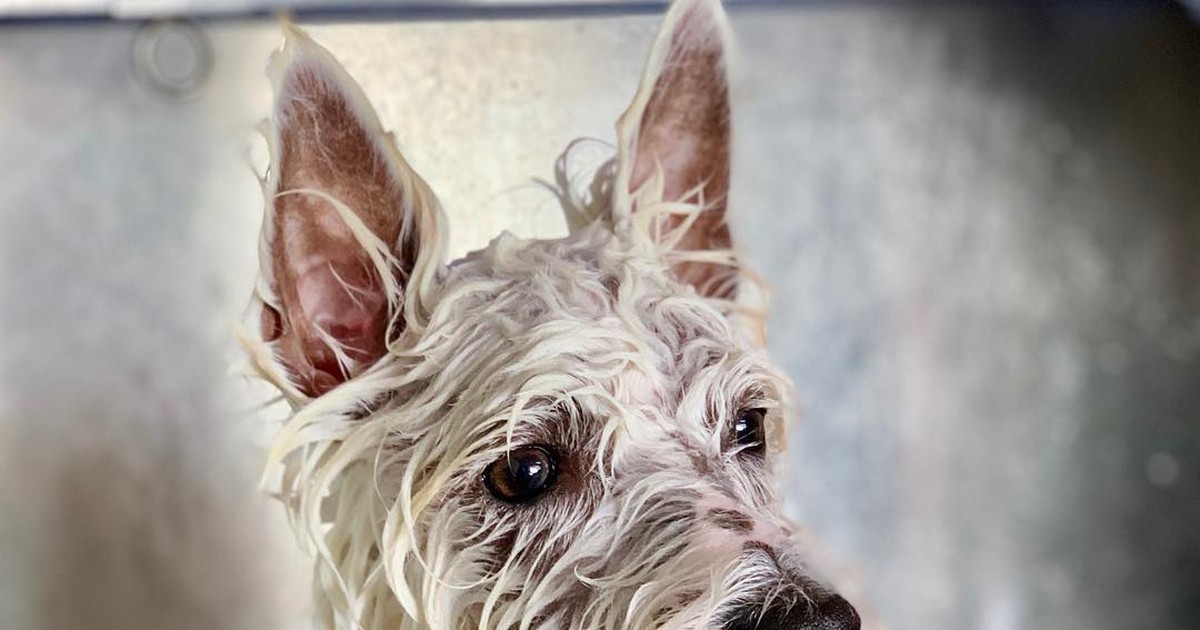
Westies are predisposed to yeast infections caused by Malassezia, a fungus that lives on the skin of all dogs. In most breeds, it stays in balance and causes no problems. In westies, it overgrows more easily, especially when the skin is already irritated by allergies. The result is itchy, smelly, dark, oily skin that doesn’t respond to standard allergy treatments alone.
How to Recognize a Yeast Infection
Yeast infections have distinctive characteristics that set them apart from other skin issues:
The smell. A strong yeasty, sour, or musty odor – sometimes described as smelling like corn chips or stale bread. If your westie’s paws or ears have this smell, yeast is the likely culprit.
Dark, oily skin. Yeast-affected skin darkens to a brownish or blackish color and becomes greasy. This is different from the dry, flaky skin of standard dermatitis.
Intense itching. Yeast infections itch aggressively. Your westie may lick, scratch, and chew the affected areas obsessively.
Location. Between the toes, in the ear canals, in skin folds, around the groin, and on the belly. These are all warm, slightly moist areas where yeast thrives.
Ear involvement. Chronic yeast ear infections are extremely common in westies and are frequently connected to skin allergies. The ear canal becomes inflamed from the underlying allergy, creating conditions for yeast overgrowth. If your westie’s ears smell yeasty and produce dark brownish discharge, that’s likely Malassezia.
What Triggers Yeast Overgrowth
Yeast is an opportunist. It waits for conditions to favor it, then multiplies rapidly.
Underlying allergies. Atopic dermatitis damages the skin barrier and creates inflammation. The damaged, inflamed skin is the perfect environment for yeast to overgrow. This is why treating only the yeast without addressing the underlying allergy leads to constant recurrence.
Moisture. Yeast loves moisture. Damp fur that isn’t fully dried after baths, moisture between the toes from walking on wet surfaces, or high humidity all promote yeast growth. This is why blow-drying after baths is so important for westies.
Warm environments. Higher temperatures accelerate yeast growth. Skin folds, ear canals, and spaces between toes are naturally warmer than exposed skin.
Immune suppression. Anything that weakens the immune system – including the chronic inflammation from untreated allergies – makes it harder for the body to keep yeast in check.
Managing Yeast Infections
Antifungal shampoo. Malaseb is specifically formulated for bacterial and yeast skin infections. Apply to affected areas, let it sit for 10 minutes before rinsing, and follow with thorough drying. During active infections, use 2-3 times per week.
Chlorhexidine between baths. Chlorhexidine has antifungal properties in addition to antibacterial ones. Using chlorhexidine wipes between baths helps maintain control of yeast populations on the skin.
Keep the skin dry. Blow dry completely after every bath. Wipe paws dry after walks on wet surfaces. Reduce indoor humidity if possible during peak periods.
Oral antifungals for severe cases. If topical treatments aren’t controlling the infection, your vet may prescribe oral antifungal medication like ketoconazole. This is a more aggressive approach and is typically reserved for moderate to severe cases or cases connected to westie armadillo syndrome.
Address the underlying allergy. This is the part that makes long-term management possible. If you only treat the yeast without managing the allergy that’s creating the conditions for it, the yeast comes back as soon as treatment stops. The full allergy management protocol – environmental controls, bathing routine, diet, daily wipe-downs – is in our westie skin and allergies guide.
Preventing Recurrence
Yeast infections in westies tend to be recurring rather than one-time events. The genetic predisposition doesn’t go away. Prevention is about maintaining conditions that keep yeast in balance: clean dry skin, controlled allergen exposure, consistent grooming, and ongoing monitoring of the key areas (paws, ears, skin folds).
The weekly skin check routine is essential. If you catch yeast overgrowth early – that first whiff of yeasty smell, the first sign of darkening skin – you can manage it with topical treatment. Left for two weeks, it becomes a vet visit with prescription medication.
For the complete skin care routine and flare-up protocol, see our westie skin and allergies guide. The Complete Westie Care Guide includes the printable weekly checklist.