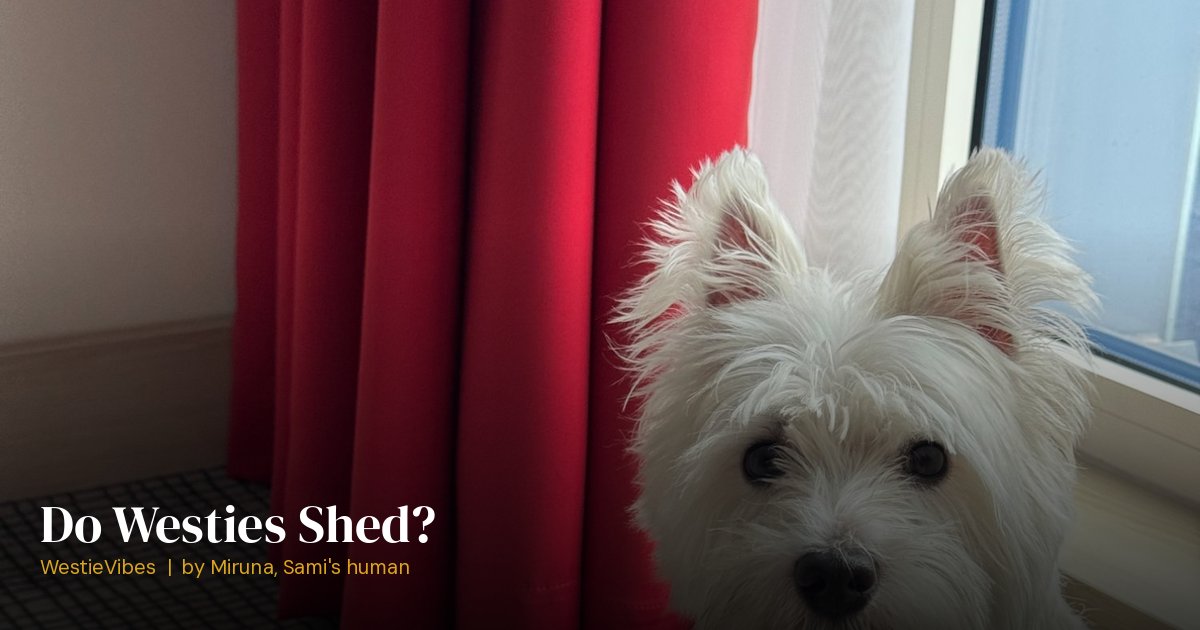
Westies shed very little compared to most breeds, and they’re widely considered hypoallergenic. But “hypoallergenic” doesn’t mean allergen-free, and “minimal shedding” doesn’t mean no grooming. If someone told you westies don’t shed at all, they oversimplified it.
The Short Answer
Westies have a double coat – a soft undercoat and a harsher outer coat. The outer coat holds onto dead hair rather than dropping it onto your furniture, which is why you won’t find westie hair tumbleweeds rolling across your floor the way you would with a labrador or a husky. But the dead hair doesn’t disappear. It stays in the coat until you brush it out or it mats.
That’s the trade-off: less shedding on your clothes and furniture, more grooming required to remove the dead hair from the coat. If you don’t brush regularly (2-3 times per week), the dead undercoat builds up, tangles, and creates mats that trap moisture and allergens against the skin. For a breed already prone to skin problems, that’s a recipe for trouble.
Are Westies Hypoallergenic?
Yes, westies are considered a hypoallergenic breed. They produce less dander than heavy-shedding breeds, and since most of their dead hair stays in the coat rather than becoming airborne, there’s less allergen floating around your home.
But no dog is truly allergen-free. People with dog allergies react to proteins in dander, saliva, and urine – not to the hair itself. A westie produces less dander than a German shepherd, but they still produce some. If your allergies are severe, spend time with a westie before committing. Mild to moderate allergy sufferers usually do well with westies. Severe allergy sufferers may still react.
The irony is that while westies are hypoallergenic for their human owners, the breed itself is extremely allergy-prone. Most westies develop some form of skin allergy during their lifetime. So you’re less likely to be allergic to your westie, but your westie is very likely to be allergic to something. See our westie skin and allergies guide for more on that.
Why Is My Westie Shedding More Than Expected?
If your westie seems to be shedding more than the “minimal shedding” promise, there are a few possible reasons:
Seasonal coat changes. Westies shed slightly more during spring and fall as the undercoat adjusts to temperature changes. This is normal and temporary. Increase brushing to 4-5 times per week during these transitions.
Clipping changes the coat texture. If your westie is clipped rather than hand-stripped, the coat gradually softens over time. Softer coats shed differently than the correct harsh outer coat. The hair may release more easily instead of staying in the coat. This is cosmetic, not a health concern, but it’s worth knowing.
Skin problems. Allergies, yeast infections, and other skin conditions cause excessive hair loss. If your westie is shedding in patches, has visible bald spots, or the shedding comes with itching and redness, that’s not normal seasonal shedding – that’s a skin issue that needs attention. See our skin allergies guide.
Diet. A poor diet shows up in the coat first. Westies eating food they’re sensitive to (chicken and beef are the most common triggers) may develop a dull, thin coat that sheds more. Omega-3 fatty acids from fish-based food or supplements support coat health and reduce shedding. See our best food for westies guide.
Stress or hormonal changes. Major life changes, illness, or hormonal imbalances can trigger temporary increased shedding. If it’s sudden and significant, mention it to your vet.
How to Manage Westie Shedding
Brush 2-3 times per week with a slicker brush followed by a metal comb. This removes the dead hair from the coat before it has a chance to end up on your furniture. Regular brushing is the single most effective shedding control measure.
Bathe on schedule. Regular baths loosen and remove dead undercoat. Follow with thorough blow-drying, which also blows out loose hair. See our bathing frequency guide for the right schedule based on your westie’s skin.
Professional grooming every 6-8 weeks. A good groomer removes the dead undercoat that home brushing misses. If your westie is hand-stripped, the dead outer coat is removed by the root, which keeps shedding at its absolute minimum.
Feed well. Quality food with omega-3 fatty acids produces a healthier coat that sheds less. A westie eating food they’re allergic to will have a dull, thinning coat regardless of grooming.
For the full grooming routine, see our complete westie grooming guide.
Watch: Sami’s Story
How I keep Sami’s white coat clean:


