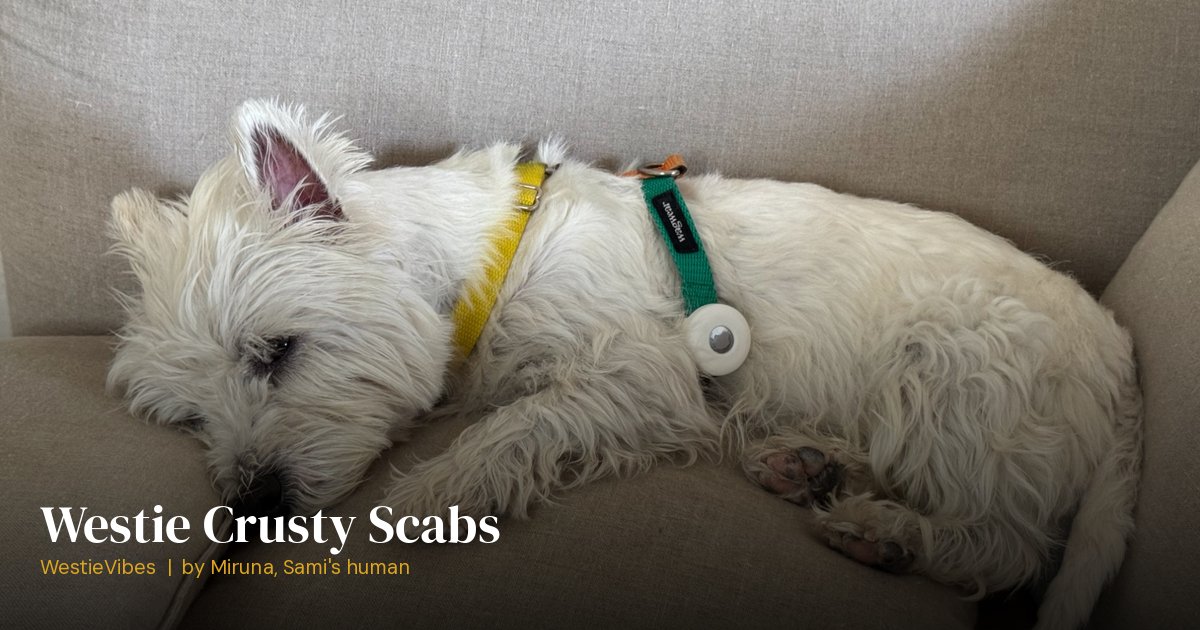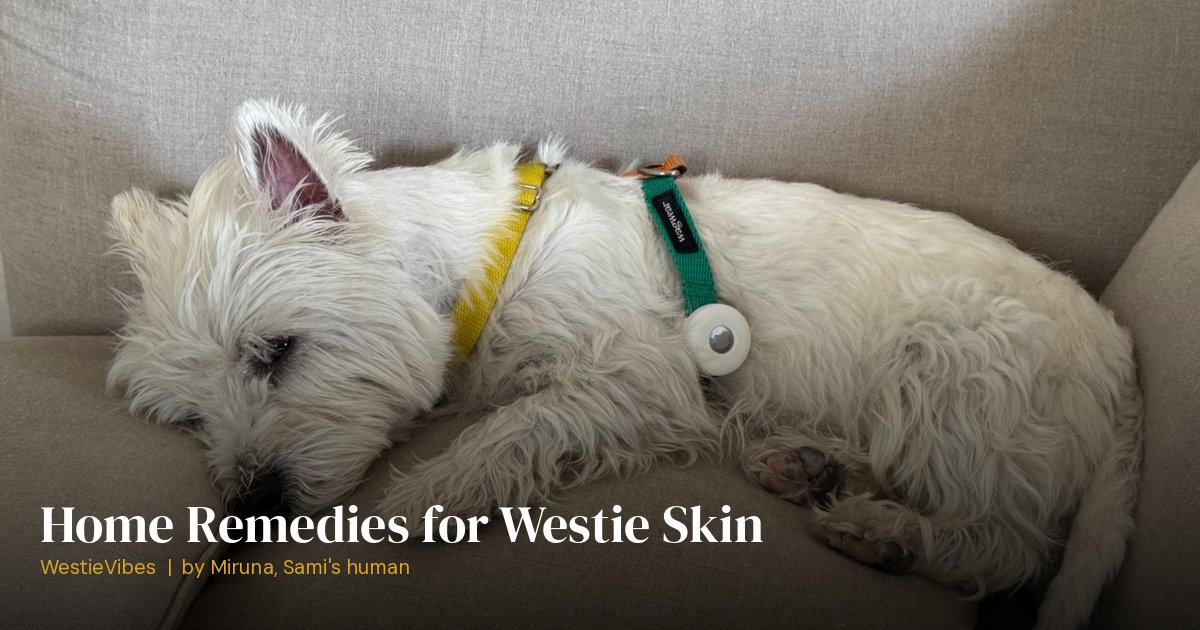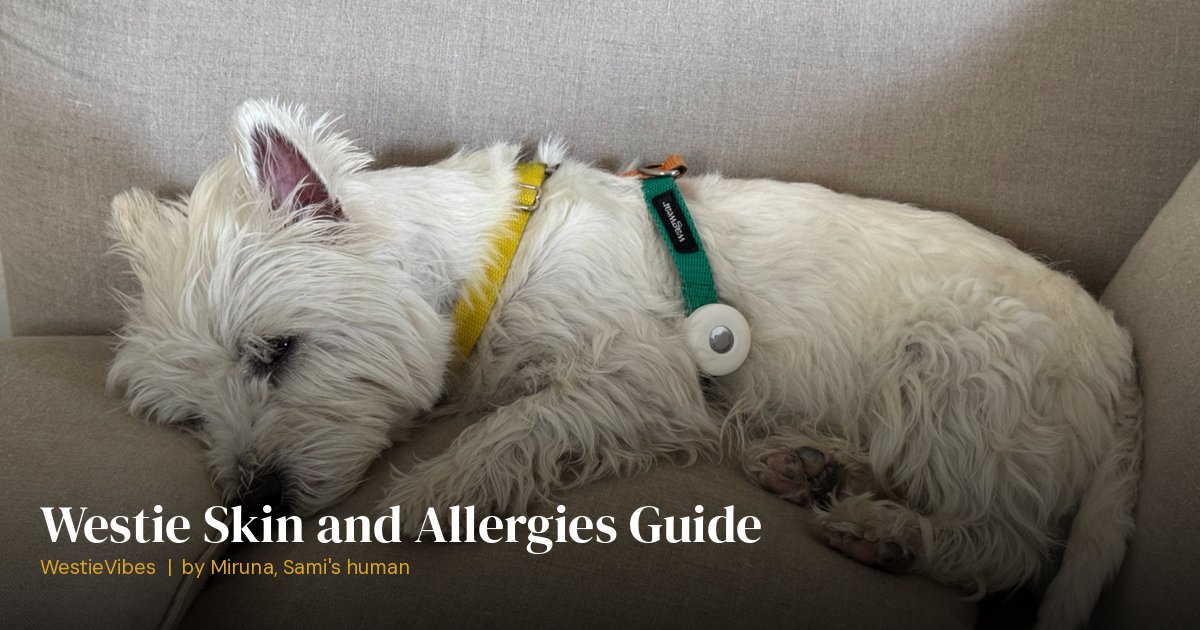
Westies are genetically predisposed to atopic dermatitis – a chronic inflammatory skin condition triggered by environmental allergens. This isn’t a flaw in your particular dog. It’s a breed-wide reality that affects the majority of westies to some degree.
Sami started showing signs around one year old. Licking and biting his paws, especially after running in the grass. I didn’t think much of it at first – I actually posted videos of him chewing on his paws because I thought it was funny. A few followers messaged me and said it could be allergies. That’s when I started paying attention. By the time I took his allergies seriously, we were already deep into flare-ups, vet visits, and a lot of trial and error.
Everything in this guide comes from that experience.
Environmental vs. Food Allergies
Environmental allergies (dust mites, pollen, mold) are responsible for the large majority of westie skin issues. Food allergies cause the rest. The distinction matters because the treatment is completely different.
Environmental allergies flare up seasonally or when humidity changes. Food allergies tend to be constant regardless of season. If your westie’s skin gets worse during winter when indoor heating kicks up dust, or during spring pollen season, that points to environmental triggers. If the itching never lets up regardless of time of year, investigate food.
Sami has both. His environmental allergy is dust mites – humidity seems to be the trigger. For some reason he gets itchier during rainy days, and his skin consistently worsens in winter when indoor humidity goes up. He’s also slightly allergic to meat protein, which means I have to be careful about what he eats.
The Three Spots to Check Weekly
Westie dermatitis almost always appears first in three predictable locations: behind the ears, between the toes, and around the muzzle. Check these areas every week. What you’re looking for is pink or reddened skin, tiny bumps, excessive moisture, or a yeasty smell.
Catching a flare-up in the first 48 hours means you can manage it topically. Missing it for two weeks means a vet visit, medication, and a miserable dog.
The paw licking test: if your westie licks or chews their paws for more than a few seconds at a time, especially at night, that’s not a quirk. It’s the earliest and most reliable sign of an allergy flare-up. With Sami, the skin between his toes reacts first. Persistent nighttime licking was always my signal to start the flare-up routine.
The Flare-Up Protocol
When a flare-up happens, act fast but calmly. This is the exact protocol I use with Sami:
Step 1: Prevent licking and scratching. A recovery cone is genuinely the most effective tool. Saliva makes inflamed skin dramatically worse by introducing bacteria and keeping the area moist. I’ve kept Sami in a cone for days during bad flare-ups, especially at night. After 2-3 days, the skin gets a chance to heal.
Step 2: Clean the affected area with chlorhexidine. I use chlorhexidine wipes or mousse (2-3% concentration). This disinfects without requiring water, which matters because wet skin worsens the problem. Multiple times a day during flare-ups, once every few days when stable.
Step 3: Apply treatment cream. After chlorhexidine, I use fusidic acid cream (vet-prescribed, brand name Isoderm). It’s an antibiotic and steroid cream that treats infection and relieves itching. Applied only on hot spots, then immediately put the cone on so Sami can’t lick it off.
Step 4: For severe flare-ups – hydrocortisone spray. This is the emergency tool. Anti-inflammatory spray that calms itchy skin within minutes. I reserve this for the worst cases and use it twice a day. It smells bad (like acetone) and Sami hates it. But it works.
Bathing for Allergy Management
The standard “bathe every 4-6 weeks” advice doesn’t apply to westies with allergies. More frequent baths actually help by washing allergens off the coat and skin. During bad periods, I bathed Sami once a week with Douxo S3 Calming shampoo, letting it sit for 10 minutes before rinsing.
The key detail: blow dry completely after every bath. Damp fur creates the perfect environment for yeast and bacteria. For more on bathing frequency, see our how often to bathe a westie guide.
The Daily Skin Care Routine
I clean Sami’s paws, face, and belly every evening with fragrance-free grooming wipes. Every evening. This removes allergens he’s picked up during the day before they sit on his skin overnight. Two minutes, every day, non-negotiable.
The weekly skin check covers both ears, all paws (between every toe), muzzle, belly, inner thighs, and base of tail. Smell the ears and paws – a yeasty or sour smell means something is brewing.
Diet and Skin Health
What your westie eats directly affects their skin. Common allergens include chicken, beef, wheat, corn, and soy. Chicken is the single most common food allergen in dogs, and westies react to it more than most breeds.
If your westie has persistent skin problems, eliminate chicken-based food first – including treats, which owners constantly overlook. One chicken-based treat per day is enough to keep a food allergy active. For the full food strategy, see our best food for westies with skin allergies guide.
When to See the Vet
Manage at home: mild redness that responds to chlorhexidine within 2-3 days. Occasional paw licking controlled by wipe-downs and a cone overnight.
Schedule a vet visit: redness spreading or not improving after 3-4 days of home care. Persistent head shaking with odor from ears. Any hot spots that are weeping or crusting over. Persistent scratching that’s disrupting sleep or daily activity.
Go today: sudden swelling of the face or body. Difficulty breathing. Open wounds that won’t stop bleeding. Any rapid, dramatic change in skin condition.
We put the complete skin management protocol, including the weekly checklist and product list, in the Complete Westie Care Guide.
Watch: Sami’s Story
Watch Sami’s full skincare routine:
Foods to avoid for westie skin allergies: