Most westie puppies are ready for their first professional grooming session at 12-16 weeks old, after they’ve had their initial vaccinations. But the grooming routine at home should start the day you bring them home.
Home Grooming: Start Immediately
The goal in the first few weeks isn’t a perfect coat – it’s getting your westie puppy comfortable with being handled. Touch their paws, ears, muzzle, and belly daily. Gently run a soft brush over their coat. Handle their nails even if you’re not cutting them yet. Open their mouth and touch their teeth.
Every one of these interactions is building tolerance for a lifetime of grooming. A westie who learns at 8 weeks that having their paws handled is normal will be dramatically easier to groom at 8 years. A westie who first experiences paw handling at a groomer’s table will fight it forever.
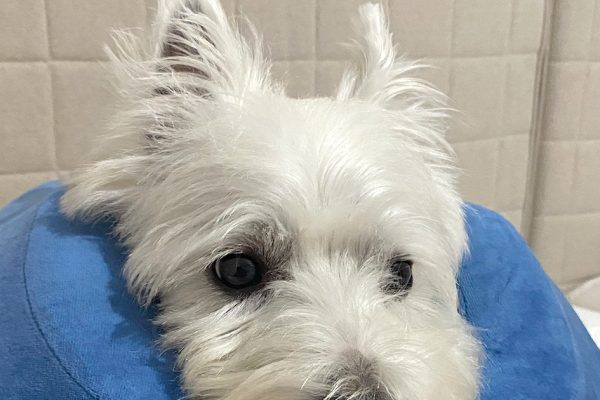
When Sami was a puppy, I wish I’d been more consistent with this. He was fluffy as a cloud and I hadn’t groomed him at all before his first professional session. The early handling practice would have made everything easier down the road.
When to Book the First Professional Groom
Schedule the first appointment for around 12-16 weeks old, once your puppy has completed at least their second round of vaccinations. Call the salon and tell them it’s a first-time puppy visit. Good groomers schedule extra time for puppy introductions.
The first visit should be gentle and short. Many groomers offer a “puppy introduction” package: a bath, light trim, nail clip, and lots of positive reinforcement. The goal is a positive experience, not a perfect haircut. If the puppy leaves happy, you’ve succeeded.
What to Ask For at the First Groom
Keep it simple. A bath with gentle puppy shampoo, a light sanitary trim, nail clip, and ear cleaning. Don’t ask for a full breed cut on a first visit – the puppy needs to learn that the grooming table is safe before you add clippers and long sessions.
Ask the groomer to use fragrance-free products. Westie puppies have even more sensitive skin than adult westies, and this is the age when allergies can begin developing. No perfume spray at the end, no fragranced conditioners.
Ask if you can stay nearby during the first session. Some salons allow it, some don’t. If your puppy can hear or see you, it reduces stress significantly.
The Puppy Coat vs. the Adult Coat
Your westie puppy’s coat will change. The soft, fluffy puppy coat gradually transitions to the adult double coat between 6-12 months. During this transition, the coat can look uneven and may mat more easily than usual.
This is normal, not a grooming failure. Brush more frequently during the coat transition period – daily if possible. The undercoat is growing in and the old puppy hair needs to come out. A slicker brush and metal comb combination works best.
Don’t panic about coat color during this phase either. Some westie puppies go through a slightly cream or yellowish phase before the adult white coat establishes. This corrects itself.
Building the Puppy Grooming Routine
Daily from day one: Handle paws, ears, muzzle. Gentle brushing with a soft brush. Wipe face and paws with a damp cloth after outdoor time.
Weekly: More thorough brushing with a slicker brush. Check ears for any unusual smell or discharge. Check between toes for redness.
Every 2-3 weeks: Nail trim. Start this early so your puppy accepts it as routine.
Once vaccinations allow: First professional grooming appointment. Then every 6-8 weeks ongoing.
The grooming habits you build in the first year set the tone for the next 12-15 years. Invest the time early. For the full adult grooming schedule, see our complete westie grooming guide, and for more on haircut options as your puppy grows, check out westie haircut styles.
Watch: Sami’s Story
We made plenty of mistakes with Sami as a puppy – here’s what we learned: