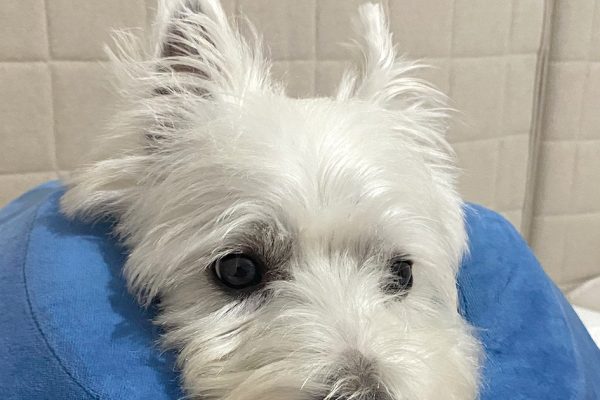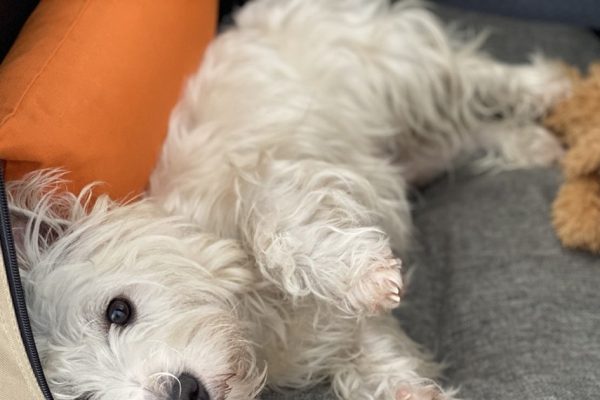
Craniomandibular osteopathy – commonly called “westie jaw” or CMO – is a condition where the jawbone grows abnormally in puppies, causing pain and difficulty eating. It typically appears between 4 and 8 months of age and is one of the few health conditions that primarily affects westies (along with Scottish terriers and cairn terriers).
The good news: it usually resolves on its own by 12 months as bone growth stabilizes. The difficult part: the active phase can be painful and stressful for both the puppy and the owner.
What Happens
During normal growth, the jawbone develops in a predictable pattern. In CMO, extra bone forms along the jaw and sometimes the base of the skull. This abnormal bone growth causes swelling, pain when opening the mouth, and difficulty eating.
The condition is inherited, passed through an autosomal recessive gene. This means both parents must carry the gene for a puppy to develop it. Not every carrier puppy will show symptoms, but the genetic potential is there.
Signs to Watch For
CMO typically appears between 4-8 months old. The signs can come on suddenly:
Reluctance to eat or difficulty chewing. A puppy who was eating normally suddenly backs away from the food bowl or only eats soft food. They may approach the bowl eagerly but then pull away after trying to chew.
Drooling more than usual. Pain in the jaw causes excessive salivation.
Swelling along the jawline. You can sometimes feel or see firm swelling along the lower jaw. It may be on one or both sides.
Crying or whimpering when yawning, being picked up, or having the head touched. Any movement that puts pressure on the jaw causes pain.
Fever. Some puppies develop recurring fevers during active episodes.
If your westie puppy shows any combination of these signs between 4-8 months, see your vet promptly. Diagnosis is typically confirmed with X-rays showing the characteristic abnormal bone growth.
Management During the Active Phase
There’s no treatment that stops the abnormal bone growth – it runs its course. Management focuses on keeping the puppy comfortable and well-nourished while the condition is active.
Pain management. Your vet will prescribe anti-inflammatory medication. This is essential – untreated pain causes the puppy to stop eating, which creates additional problems during a critical growth period.
Soft food. Switch to wet food or soften kibble with warm water so your puppy can eat without painful chewing. Some puppies need food blended to a very soft consistency during the worst episodes.
Regular vet monitoring. Follow-up visits to track the progression and adjust pain management. The condition typically cycles through flare-ups and calmer periods.
Patience. This is hard to watch, but the condition almost always resolves. As the puppy matures and bone growth stabilizes (usually around 12 months), the abnormal bone remodels and symptoms disappear.
Long-Term Outlook
Most westie puppies who develop CMO recover completely. Once the active phase passes, they live normal, healthy lives with no lasting effects. In rare, severe cases, the jaw may have some permanent changes that affect how the dog chews, but this is uncommon.
If your westie puppy is diagnosed with CMO, let the breeder know. Since it’s a genetic condition, this information helps responsible breeders make better breeding decisions to reduce the incidence in future litters.
For the full age-based health screening guide covering CMO and all other westie-specific conditions, see our westie health problems overview.