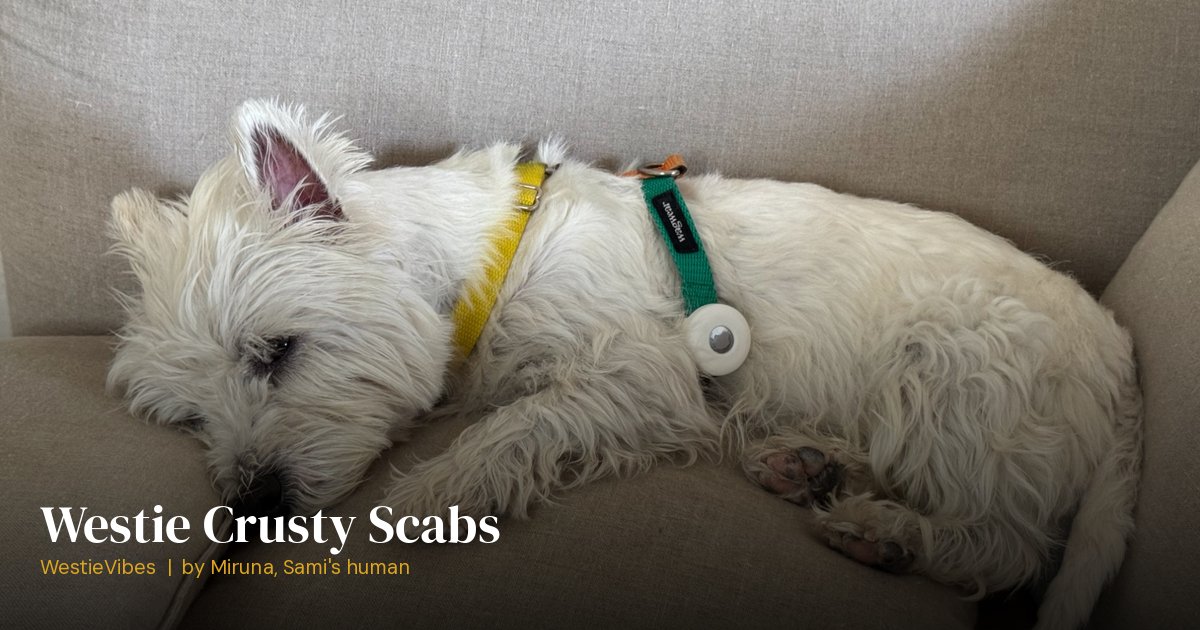
Crusty scabs on a westie are almost always connected to an underlying allergy or infection – not a random skin injury. The scabs form because your westie has been scratching, licking, or chewing irritated skin until it breaks, and then the broken skin crusts over as it tries to heal while still being irritated.
It’s a cycle: allergy triggers itching, itching causes scratching, scratching breaks the skin, broken skin gets infected, infection causes more itching, more scratching, more scabs. Breaking this cycle is the goal.
The Most Common Causes
Atopic Dermatitis (Environmental Allergies)
The number one cause in westies. Environmental allergens like dust mites, pollen, and mold trigger an inflammatory response in the skin. Your westie scratches, the skin breaks, scabs form. These scabs typically appear in the classic allergy zones: between the toes, behind the ears, on the belly, and around the muzzle.
If the scabs are worse in certain seasons or during periods of high humidity, environmental allergies are the likely culprit.
Yeast Infections (Malassezia)
Westies are predisposed to overgrowth of Malassezia yeast, a fungus that naturally lives on dog skin. When conditions are right – warm, moist, irritated skin – the yeast multiplies and causes dark, oily, crusty patches with a distinctive sour or musty smell.
Yeast-related scabs tend to be darker in color (brownish-black), oily rather than dry, and accompanied by a noticeable odor. They often appear in skin folds, around the ears, and between the paws. See our westie yeast infection guide for more details.
Bacterial Skin Infection (Pyoderma)
When scratching breaks the skin barrier, bacteria that normally live harmlessly on the surface can cause infection. Bacterial scabs tend to be yellowish, crusty, and may have pus or discharge underneath. You might see circular patterns of flaking skin (called “epidermal collarettes”) around the edges.
Hot Spots
Localized areas of intense infection and inflammation that develop rapidly – sometimes overnight. A hot spot starts as a small irritated area and can expand to several inches within hours. They’re usually wet, raw, and very painful. Westies develop hot spots when they lick or chew one area obsessively.
What to Do When You Find Scabs
Don’t pick at them. Removing scabs exposes raw skin to more bacteria and slows healing.
Prevent licking. Put a recovery cone on your westie. This is the single most effective step because saliva introduces bacteria and moisture to broken skin.
Clean with chlorhexidine. Use chlorhexidine wipes or mousse (2-3% concentration) on the affected area. This disinfects without adding moisture. Do this 2-3 times daily.
Monitor for 48-72 hours. If the area improves with cone and chlorhexidine, continue home management. If it spreads, worsens, starts oozing, or your westie seems in significant pain, see your vet.
When Scabs Mean a Vet Visit
Scabs that are spreading despite home treatment. Any scabs with green or yellow discharge. Scabs accompanied by hair loss over a large area. Scabs that keep recurring in the same location. Your westie refusing to eat, lethargic, or showing signs of pain beyond itching. Any sudden, widespread outbreak of scabs or skin changes.
Your vet may do skin scrapes or impression smears to identify the specific infection, prescribe antibiotics or antifungals, and investigate the underlying allergy that’s driving the whole cycle.
Preventing Recurring Scabs
Scabs are a symptom, not the root problem. If your westie gets recurring scabs, the underlying cause needs to be addressed. That usually means allergy management: regular bathing with medicated shampoo, daily wipe-downs, environmental controls, and possibly dietary changes.
For the complete management approach, see our westie skin and allergies guide. If you suspect the scabs are yeast-related, our yeast infection guide covers that specifically. And for diet-related skin issues, check best food for westies with allergies.