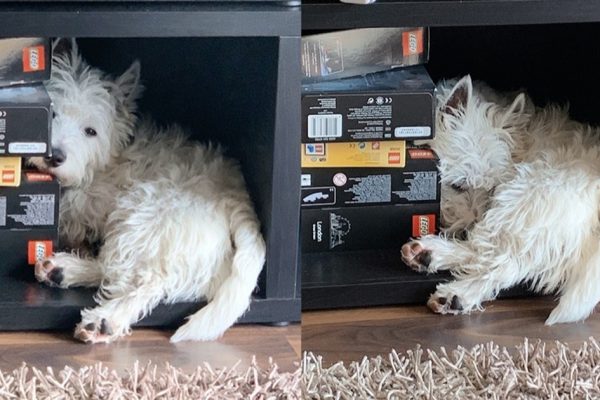
Westies are considered seniors starting around age 8, though many stay active and sharp well beyond that. The shift isn’t sudden – it’s a gradual change in energy, recovery time, and what their body needs from you. The routines that worked at age 3 need adjusting, and the health monitoring that was annual becomes more frequent.
Sami is getting close to this territory. I’m already noticing small changes – he naps more than he used to, and his walks are a bit shorter than they were two years ago. None of it is alarming, but all of it is information.
Exercise: Shorter, Not Stopped
The biggest mistake with senior westies is reducing activity too dramatically. An older westie still needs daily exercise – it just needs to be adapted to their pace.
Instead of one long walk, try two or three shorter ones. Watch for signs that your westie is done before you are: slowing down, stopping to rest, reluctance to continue. These aren’t stubbornness (well, not always – it is still a westie). They’re communication.
Mental stimulation becomes even more important as physical capacity decreases. Puzzle feeders, sniff walks where your westie sets the pace and follows their nose, and short training sessions all keep the brain active without taxing the body.
Diet Adjustments
Senior westies often need fewer calories because they’re less active, but the same or higher quality nutrients. A food formulated for senior small breeds can help, but the most important thing is portion control – don’t keep feeding the same amount you gave a 3-year-old to an 8-year-old who exercises half as much.
Watch for weight gain. Older westies who gain weight put additional stress on joints that may already have some wear. But also watch for unexplained weight loss – that warrants a vet visit, as it can indicate thyroid issues, diabetes, or other conditions.
Joint support supplements (glucosamine, chondroitin, omega-3 fatty acids) are worth discussing with your vet if your senior westie shows any signs of stiffness or reduced mobility.
Increased Health Monitoring
After age 8, shift from annual to twice-yearly vet visits. The conditions that are most relevant in senior westies:
Pulmonary fibrosis. If you haven’t had a baseline chest X-ray done, now is the time. Watch for exercise intolerance, dry cough, or increased breathing rate at rest. See our westie lung disease guide for details.
Diabetes. Increased thirst and urination, especially combined with weight changes, should prompt bloodwork. It’s more common in older dogs.
Kidney and liver function. Routine bloodwork catches changes in kidney and liver values before symptoms appear. Early detection makes a real difference in management.
Dental disease. Years of plaque buildup take their toll. Professional dental cleanings become more important even as the anesthesia risk increases with age. Discuss the balance with your vet.
Lumps and bumps. Older dogs develop skin lumps. Most are benign (lipomas, sebaceous cysts), but any new, growing, or changing lump should be checked. Your vet can do a simple needle aspirate to determine if it needs further attention.
Cognitive Changes
Some senior westies develop canine cognitive dysfunction – the dog equivalent of dementia. Signs include disorientation in familiar places, changes in sleep patterns (restless at night, sleeping more during the day), reduced interaction with family, and house-soiling in a previously trained dog.
These changes are gradual and can be subtle. If you notice your westie seems confused in spaces they know well, or their personality shifts in ways that don’t match a specific physical problem, bring it up with your vet. There are medications and supplements that can help manage cognitive decline.
Comfort Adjustments at Home
Orthopedic dog beds support aging joints. Ramps or steps to furniture reduce jumping stress. Non-slip rugs on slippery floors prevent falls – older westies can lose confidence on smooth surfaces. Raised food and water bowls reduce neck strain during meals.
Keep the environment consistent. Senior dogs with cognitive changes do better with routine and familiar surroundings. Major rearrangements of furniture or household changes can cause confusion and anxiety.
Quality of Life
This is the conversation nobody wants to have, but it’s the most important one. Quality of life in senior dogs isn’t about a single dramatic event. It’s about the balance of good days versus bad days.
Track the basics: appetite, mobility, engagement with family, pain level, ability to do the things they enjoy. As long as the good days significantly outnumber the bad ones, your westie is doing well. When that balance shifts, have an honest conversation with your vet.
For the complete health screening schedule from puppy to senior, see our westie health problems overview. The Complete Westie Care Guide covers the full lifecycle.