
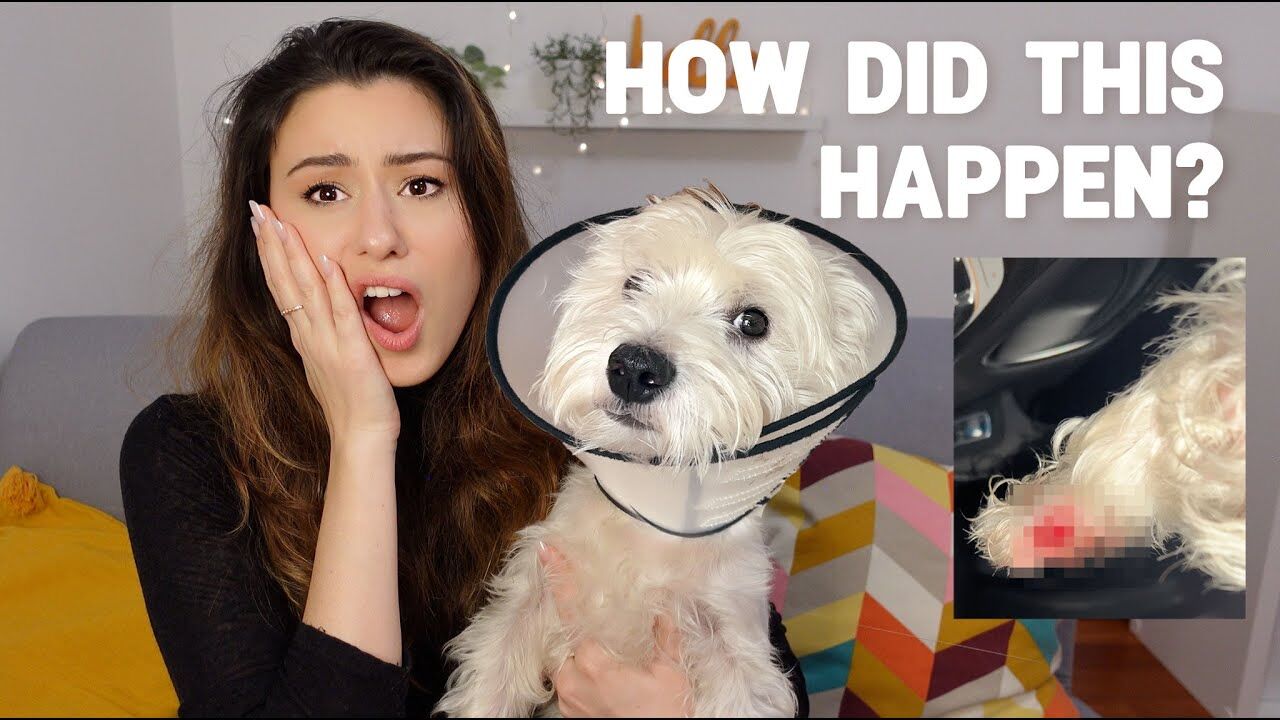
If your dog just ripped off a dewclaw nail: stay calm, it looks worse than it usually is. Disinfect the wound with diluted antiseptic, apply antibiotic cream if you have it, bandage it overnight to stop the bleeding, and call your vet. The nail usually grows back.
That's the short version I wish someone had given me the night Sami tore his off completely. Here's the whole story - what happened, what the emergency vet did, and the one habit that would have prevented it. As always, this is our experience as owners, not veterinary advice.
What a Dewclaw Actually Is
The dewclaw is the small nail on the inside of the leg, a little way up from the paw - the dog equivalent of a thumb. On the front legs it's normal anatomy, and most dogs, Westies included, have them. Because it sits off the ground, it never touches pavement, which means it never wears down the way the other nails do.
That's what makes it the accident-prone one. It grows faster than you expect, curls if neglected, and sticks out at exactly the right angle to hook on carpets, upholstery, and - as we learned - the gap between a stair and its frame.
How It Happened
It was midnight and we were getting ready for bed. Sami has little stairs up to our bed, and instead of climbing them from the front like always, he rushed them from the side. I was looking right at him: he seemed to trip halfway, there was a small click sound, and then he carried on like nothing happened, climbed into bed, and lay down.
Five minutes later my partner noticed blood on the sheet. I picked Sami up, looked at his paw in the bathroom, and his dewclaw nail was gone. Not broken - gone. It was lying on the floor under the stairs, where it had caught between the step and the wooden frame and been ripped clean off.
The part I still can't get over: he never made a sound. No yelp, no whine, nothing. Terriers hide pain frighteningly well, and it makes me wonder how many smaller hurts he's simply never told us about.
What to Do First
We panicked and drove to the emergency hospital, which turned out to be the right place but the wrong order of operations. Our own vet, reached on her emergency number from the parking lot, walked me through the correct first aid - and it's simple enough to do at home:
Disinfect the wound. Use an iodine antiseptic like Betadine, diluted with a little water - at full strength it burns. Chlorhexidine works too.
Apply antibiotic cream on the wound after disinfecting.
Bandage it overnight to stop the bleeding. The nail bed is a highly vascularized area, so there can be a surprising amount of blood from a small injury. That's normal.
Take the bandage off the next morning. This surprised me: the vet said keeping a wound like this wrapped for too long traps moisture and bacteria and can cause the very infection you're trying to avoid. If it's not bleeding the next day, it stays open to the air.
After that, it's disinfectant and antibiotic cream twice a day while it heals, and a cone for a few days so they don't lick it.
Does It Need a Vet?
The doctor on call did exactly what our vet had described over the phone, plus two things I couldn't do myself: she gave him proper painkillers for the next two days, and she confirmed nothing else was damaged. The whole emergency visit came to about 60 euros including the medication - the consult alone was 58, roughly double a normal appointment. Worth every cent for the peace of mind alone.
So: if the bleeding is controlled and your dog is weight-bearing, calm first aid at home and a regular vet appointment the next day is a reasonable path - that's exactly what our own vet offered us. Go in immediately if the bleeding won't stop, if the quick or bone looks exposed, or if your dog won't put the paw down at all.
And the good news I didn't expect: the nail almost always grows back. Sami's did.
Why It Happens - and the Prevention Nobody Wants to Hear
The vet was direct about the main cause: nails that are too long catch on things. Dewclaws are especially vulnerable because they sit off the ground, never wear down naturally, and hook easily on stairs, carpets, and furniture.
I'll own this one. I'd been postponing Sami's nail trim for weeks. I kept meaning to do it, and then this happened. Westie nails need trimming every 3-4 weeks - if you can hear clicking on a hard floor, they're overdue, and the dewclaws need explicit attention because walking doesn't wear them down at all. The nail section of our Westie grooming guide covers the routine and the tools.
When you trim, do the dewclaws first, not last - they're the ones you're most likely to skip when your dog runs out of patience, and they're the only nails that genuinely can't afford to be skipped. If your groomer does the nails, mention the dewclaws explicitly; on a fluffy-legged Westie they hide in the leg furnishings and are easy to miss.
The Small Kit That Covers This
Everything the vet used that night, and everything I used for the week after, fits in one small box. If you keep these at home, a midnight nail injury becomes manageable instead of terrifying:
An iodine antiseptic (Betadine or similar) or chlorhexidine solution. Antibiotic cream. A roll of self-adhesive bandage, the kind that sticks to itself and not to fur. Styptic powder - this one's for the lesser version of this accident, when you trim a nail too short and nick the quick; it stops the bleeding in seconds. And a cone that actually fits, bought before you need it, because the midnight emergency vet marks up everything.
A fully torn nail still deserves a vet call even with the kit on hand. But doing the first aid yourself, calmly, in your own bathroom, changes the whole experience - for both of you.
When to Call the Vet
For a ripped or torn nail, call immediately if: the bleeding doesn't stop with pressure and a bandage, the nail is partially attached and hanging (it may need to be removed under sedation), the quick or bone is visibly exposed, or your dog won't bear weight on the paw.
In the days after, watch the healing: swelling, discharge, a bad smell, renewed limping, or obsessive licking despite the cone all mean infection may be setting in - vet time. Also remember dogs like this one hide pain, so check the paw daily rather than waiting for a complaint that will never come.
How Sami Did
He slept through that first night, walked normally on the paw the next day, and only protested during the twice-daily disinfecting, which he considered an outrageous breach of trust. Within a few days the wound had closed, and a few months later you couldn't tell which dewclaw it was.
The bed stairs stayed - they protect his knees, which matter more in this breed than most (see our luxating patella guide for why). The nail trims now happen on schedule. For the rest of the breed's usual surprises, our Westie health problems overview is the place to start, and the routines that prevent most of them are in the Complete Westie Care Guide.

About Westie Vibes
Westie Vibes is the home of Sami the West Highland White Terrier — tips, stories, and everything we’ve learned about life with a Westie.
Follow along and subscribe for weekly updates.